
Applications / HVAC / Chiller Controls
Static transfer switches for HVAC and chiller controls
Motors shrug off a power blink. The controllers that run them do not. A TwinSource static transfer switch keeps chiller panels, plant controllers and drive controls on a live source, so the mechanical plant keeps cooling through an electrical event.
A half-second blink can cost ten minutes of cooling
When control power drops, a chiller controller reboots and walks through its start sequence, including anti-recycle timers that protect the compressor. It can be several minutes before the machine is making chilled water again. Meanwhile the IT load, the process or the building keeps producing heat, and room temperatures rise faster than most people expect.
The equipment at risk is small: chiller control panels, plant PLCs and DDC controllers, the control power for variable-speed drives, computer room air handler controllers, valve actuators and sensors. Together they may draw a few kilowatts. They are usually fed from a single mechanical panel, sometimes through a small UPS that becomes its own single point of failure as the battery ages.
What to protect
Protect the brains of the plant
Feed the control circuits from a TwinSource STS with two independent sources behind it, for example a UPS panel and a generator-backed mechanical panel. If the preferred source sags or fails, the switch transfers as fast as a quarter cycle. Controllers stay up, drives keep their run command, and the plant rides through while the large motors coast and recover on their own.
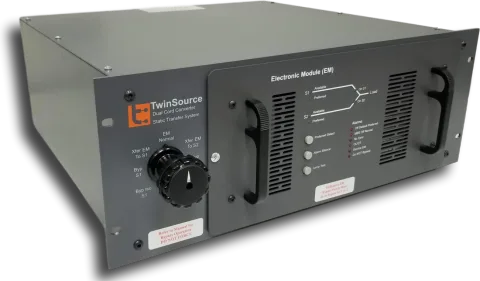
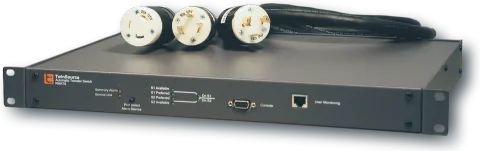
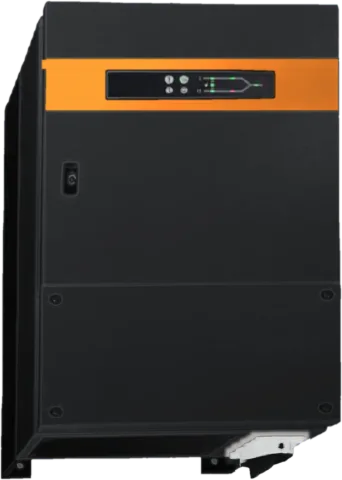
The DCC-II covers single-phase control power from 100 V to 240 V at 30 to 50 A. The 1U DCC-I handles smaller panels up to 24 A. In mechanical rooms without racks, the wall-mount DCC-4-W brings three-phase protection from 10 to 60 A to pump skids and control transformers.
Why a quarter cycle matters
Power supplies built to the ITIC curve keep running through 20 ms with no input at all. A transfer that finishes well inside that window is invisible to the load.
Why TwinSource
- Wall-mount DCC-4-W for mechanical rooms, rack-mount DCC-II and DCC-I for control cabinets
- Transfers as fast as ¼ cycle per phase using SCRs, break-before-make
- 100% continuous-duty ratings: a 50 A switch carries 50 A all day
- Built-in bypass isolation or maintenance bypass, so the electronics can be serviced without dropping the load
- 2-pole and 4-pole models switch the neutral, which keeps separately derived sources separate
- Rack, wall and free-standing enclosures from 10 A to 600 A, 100 V to 480 V, 50 or 60 Hz
In service
TwinSource switches protect chiller and HVAC control systems at sites where a loss of cooling puts the critical load at risk.
Recommended families
Questions engineers ask
Can an STS carry the chiller itself?
The DCC-4-S reaches 600 A three-phase, so smaller machines are within range. Most sites leave compressors on generator-backed mechanical power and use the STS for controls and small pumps, where the benefit per dollar is highest.
Where does the second source come from?
Any independent AC source at the same voltage and frequency: a second panel from another transformer, a UPS output, or a generator-backed bus. The farther upstream the two sources separate, the more failures the switch covers.
We already have a small UPS on the controls. Is that enough?
It covers a utility outage until the battery is exhausted. It does not help when the UPS itself fails or is taken out for service. An STS with the UPS as one source and a second panel as the other covers both cases.
Ready to specify?
Narrow the range to your voltage, current and mounting, or send us the one-line diagram and talk to an engineer.