
Applications / SCADA / Utility Controls
Static transfer switches for SCADA and utility control systems
Operators cannot control what they cannot see. TwinSource static transfer switches keep SCADA servers, remote terminal units, operator stations and plant control systems powered from whichever of two sources is healthy.
Control systems fail on small power events
Static transfer switches are long established in process control for petrochemical and power plants, and for good reason. A boiler control system that drops out can trip the unit, and the cost of recovery and lost product dwarfs the cost of the control hardware. The same holds in a utility control center or a substation control house: servers, front-end processors, communication processors, satellite clocks and operator stations are AC loads with a single input.
Substations typically have two station service sources with a mechanical transfer between them, or an inverter running from the station battery. A mechanical transfer is slow enough to reboot computer-based equipment, and an inverter is one more device that can fail or need maintenance.
What to protect
Fast transfer between station service sources
A TwinSource STS sits between two AC sources, such as two station service transformers or an inverter and a station service panel, and feeds the control system loads. It transfers as fast as a quarter cycle, so servers and RTUs never restart. The 2-pole design switches both conductors, which matters when the two sources are separately derived and grounded.
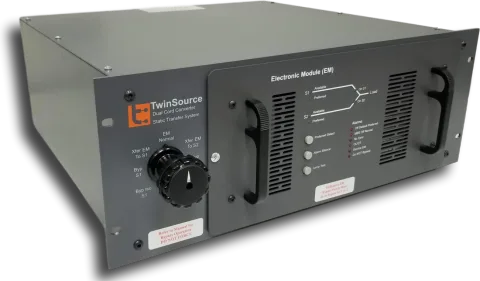
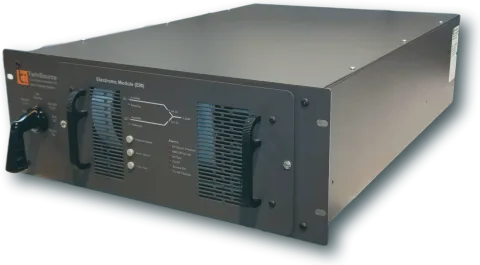
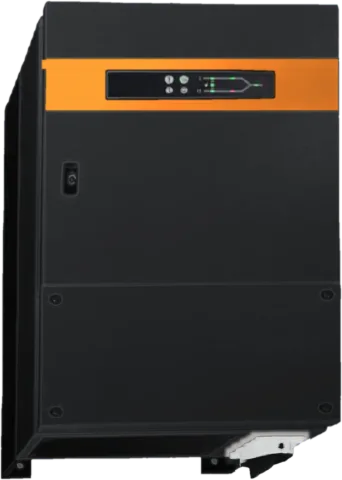
The DCC-II fits standard control house racks at 30 to 50 A, single-phase from 100 V to 240 V. The wall-mount DCC-4-W serves three-phase control panels from 10 to 60 A. Alarm contacts and Modbus RTU over RS-485 bring switch status back into the SCADA system as ordinary points, so a transfer at an unmanned site is visible at the control center.
Why a quarter cycle matters
Power supplies built to the ITIC curve keep running through 20 ms with no input at all. A transfer that finishes well inside that window is invisible to the load.
Why TwinSource
- Status and alarm points that wire straight into an RTU
- Transfers as fast as ¼ cycle per phase using SCRs, break-before-make
- 100% continuous-duty ratings: a 50 A switch carries 50 A all day
- Built-in bypass isolation or maintenance bypass, so the electronics can be serviced without dropping the load
- 2-pole and 4-pole models switch the neutral, which keeps separately derived sources separate
- Rack, wall and free-standing enclosures from 10 A to 600 A, 100 V to 480 V, 50 or 60 Hz
In service
TwinSource switches are in service on SCADA and plant control systems at power plants and utilities, where a control outage is slow and costly to recover from.
Recommended families
Questions engineers ask
Protective relays run on the station battery. What is the STS for?
The DC system covers protection and breaker control. The STS is for AC-powered equipment around it: SCADA servers, HMIs, communication gear, clocks and network switches.
Will the switch report a transfer to SCADA?
Yes. Isolated alarm contacts indicate source status, the source in use and summary alarms. The DCC-II and DCC-III also provide RS-485.
Can maintenance be done without an outage?
Yes. The DCC-II and DCC-III have built-in bypass isolation with interlocks. The electronic module withdraws for service while the bypass carries the load.
Ready to specify?
Narrow the range to your voltage, current and mounting, or send us the one-line diagram and talk to an engineer.