
Products / Three Phase STS
Three-phase static transfer switches
High-density racks, liquid cooling and process equipment all run on three-phase power. TwinSource three-phase static transfer switches cover 10 to 600 A and every regional voltage from 200 to 480 V, in whichever enclosure puts the switch closest to the load.
sixteen standard ratings
3-pole or 4-pole
rack, wall and free standing
kVA at your voltage
Three-phase power is 1.732 times line-to-line volts times amps. Select a cell to open that combination in the configurator.
3-pole or 4-pole
The pole count decides which conductors transfer. Between two UPS systems or two transformers feeding 208/120 V or 400/230 V equipment, the neutral has to move with the phases.
The range
Common to all of them
- SCR switching as fast as ¼ cycle per phase, break-before-make.
- 100% continuous-duty ratings.
- A bypass, so service never requires a load outage.
- Line-to-line voltages of 200, 208, 220, 240, 400, 415 and 480 V, with matching 4-pole line-to-neutral systems.
Why three-phase loads need a three-phase switch
Rack densities have pushed distribution to three phase at 208, 415 and 480 V, and the mechanical systems around those racks, from coolant distribution units to chiller controls, have always been three phase. A three-phase static transfer switch senses every phase of both sources and moves all poles together, so the load is never left with phases from two different sources. A sag on one phase is enough to trigger a transfer of all of them.
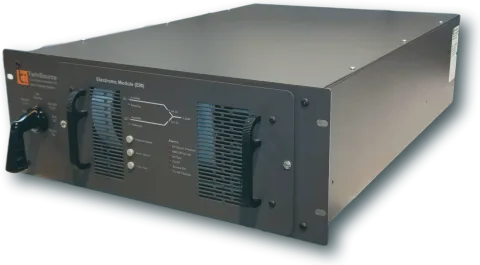
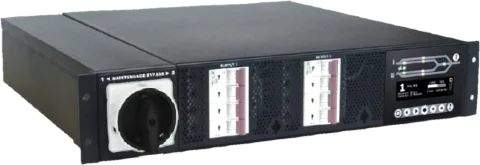
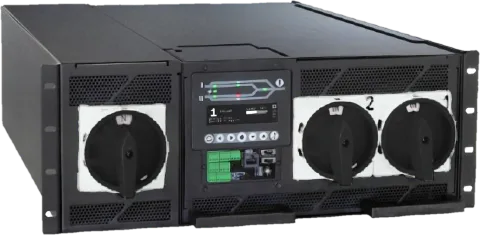
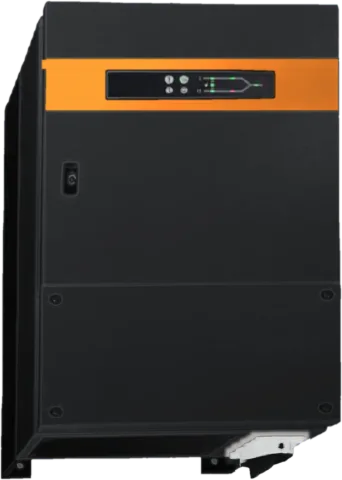
Choose the enclosure by where the load is. Rack-mount units from 10 to 120 A sit at the head of a row or inside a network rack. Wall-mount units cover the same currents in mechanical rooms and control houses. Above 120 A, the free-standing DCC-4-S feeds panels and large single loads up to 600 A, just under 500 kVA at 480 V.
Models in this category
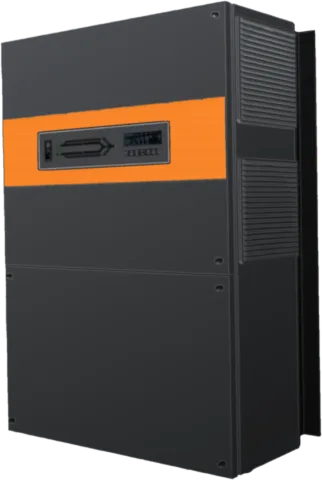
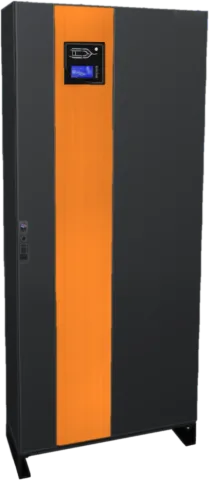
| Model | Type | Phase and poles | Voltage | Current | Transfer |
|---|---|---|---|---|---|
| DCC-III | STS | Three-phase 4-pole | 208/120 V | 50 A | As fast as ¼ cycle |
| DCC-4-R | STS | Three-phase 3 or 4-pole, or single-phase 2-pole | 100–480 V | 10–60 A three phase, 10–100 A single phase | As fast as ¼ cycle |
| DCC-4-R4 | STS | Three-phase 3 or 4-pole, or single-phase 2-pole | 100–480 V | 80–120 A three phase, 120–200 A single phase | As fast as ¼ cycle |
| DCC-4-W | STS | Three-phase 3 or 4-pole, or single-phase 2-pole | 100–480 V | 10–60 A three phase, 10–100 A single phase | As fast as ¼ cycle |
| DCC-4-W4 | STS | Three-phase 3 or 4-pole, or single-phase 2-pole | 100–480 V | 80–120 A three phase, 120–200 A single phase | As fast as ¼ cycle |
| DCC-4-S | STS | Three-phase 3 or 4-pole, or single-phase 2-pole | 100–480 V | 100–600 A three phase, 100–600 A single phase | As fast as ¼ cycle |
Where they are used
Go deeper
Questions engineers ask
When do I need a 4-pole switch?
When the two sources are separately derived, each with its own neutral-to-ground bond, and the load uses the neutral. That is the usual case for 208/120 V and 400/230 V equipment fed from two UPS systems.
Can I use three single-phase switches on a three-phase circuit?
It is not recommended. Each would transfer independently, which can leave the load with phases from two different sources.
Which voltages are supported?
3-pole: 200, 208, 220, 240, 400, 415 and 480 V. 4-pole: 200/115, 208/120, 400/230, 415/240 and 480/277 V. All at 50 or 60 Hz.
Ready to specify?
Open the configurator with this category already selected, or send us your one-line diagram.