
Products / Wall Mount STS
Wall-mount static transfer switches
Plenty of critical loads live where there is no rack: mechanical galleries, control houses, security closets, the wall beside a CDU. A wall-mount STS brings point-of-use protection to those rooms, hardwired, from 10 to 120 A three phase or up to 200 A single phase.
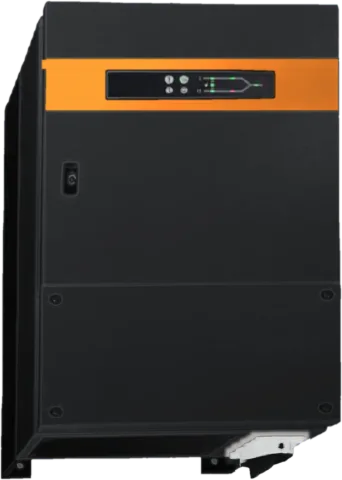
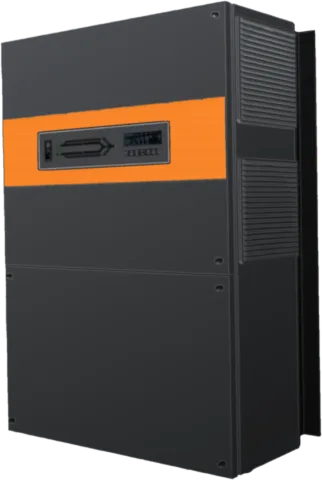
three phase, 3-pole or 4-pole
every regional voltage, 50 or 60 Hz
as fast as, per phase
Where it goes
The best place for a transfer switch is next to the load. Pick a location to see how a wall-mount unit fits.
Why wall-mount
Mechanical and control loads are usually three phase, hardwired and nowhere near an equipment rack. They are also the loads that data centers and plants have historically left on a single feed, because there was no convenient way to give them two. Liquid cooling has changed the stakes: when a coolant distribution unit stops, the racks it serves have seconds of thermal margin.
A wall-mount switch needs no floor space and no rack units. It lands two source feeds and one output on terminals, carries its full rating continuously, and includes a maintenance bypass so the electronics can be serviced without interrupting the load.
Two sizes, one platform
What to specify
- Voltage and whether the load uses a neutral: 3-pole for three-wire loads, 4-pole where the neutral must transfer between separately derived sources.
- Current, sized to the load with margin. Ratings are 100% continuous.
- Feeder breakers and conductors sized to your electrical code and the operating manual.
- The interface you want on the door: LED mimic panel or color touchscreen.
- Where the alarm contacts will report: BMS, DCIM or plant SCADA.
How it installs
A wall-mount static transfer switch is a hardwired device. Two source feeds land on the input terminals, from breakers in two different panels and ideally from two different UPS systems or transformers. One output runs to the load or to the panel that serves it. Alarm contacts go to the building management system or plant SCADA, so a transfer at two in the morning is on someone's screen.
Commissioning takes minutes: confirm both sources are available, choose the preferred one, open the preferred breaker with the load running and watch the switch carry it. Then walk through the maintenance bypass once with the operations team, so the first time they use it is not during an alarm.
Models in this category
| Model | Type | Phase and poles | Voltage | Current | Transfer |
|---|---|---|---|---|---|
| DCC-4-W | STS | Three-phase 3 or 4-pole, or single-phase 2-pole | 100–480 V | 10–60 A three phase, 10–100 A single phase | As fast as ¼ cycle |
| DCC-4-W4 | STS | Three-phase 3 or 4-pole, or single-phase 2-pole | 100–480 V | 80–120 A three phase, 120–200 A single phase | As fast as ¼ cycle |
Where they are used
Go deeper
Questions engineers ask
When should I choose wall-mount over rack-mount?
When the load is not in a rack, when it is three phase and hardwired, or when the rack has no spare space. Performance is the same; only the enclosure changes.
Can a wall-mount switch feed a panel with single-phase circuits?
Yes. Feed the three-phase panel from the switch and every circuit on that panel gains the second source. Use a 4-pole switch if the panel has a neutral.
Does it need to be near the load?
As near as practical. Everything between the switch and the load is unprotected by it, so a short run is a better run.
Ready to specify?
Open the configurator with this category already selected, or send us your one-line diagram.