
Applications / Semiconductor / Chip Fabrication
Static transfer switches for semiconductor fabrication
In a fab, the usual power problem is a sag that lasts a fraction of a second. It is enough to stop a tool, scrap the wafers inside it and start hours of recovery. TwinSource static transfer switches move sensitive loads to a healthy source before the tool notices.
Sags still stop tools that meet SEMI F47
SEMI F47 requires process equipment to ride through defined sags: down to 50% of nominal for 0.2 seconds, 70% for half a second and 80% for a full second. It has prevented a great deal of downtime. It does not cover deeper events or full interruptions, and the standard's test levels address single-phase and two-phase sags. SEMI's own task force has reported that minor three-phase sags continue to take tools down.
When power to the systems controlling tools, furnaces and handling equipment is lost, the results are scrapped product, late shipments and a loss of quality that may not show up until test. Around the tools sits a second layer of equally sensitive equipment: gas and chemical monitoring, exhaust and abatement controls, automated material handling and the facility monitoring system.
What to protect
Select the better of two sources, fast
A static transfer switch does not condition power. It chooses. Fed from two independent sources, such as feeders from separate substations or a utility feeder and a conditioned bus, it monitors both and transfers on undervoltage as fast as a quarter cycle. The load sees a disturbance far shorter than the events F47 already requires it to survive.
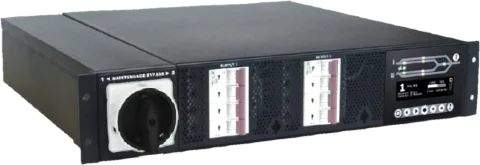
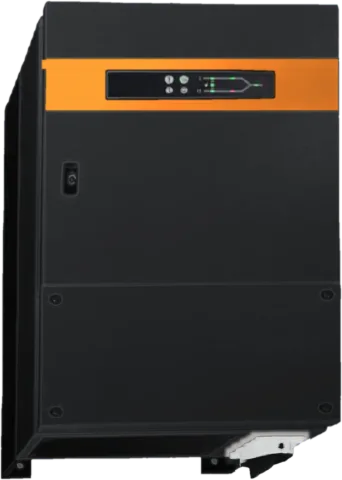
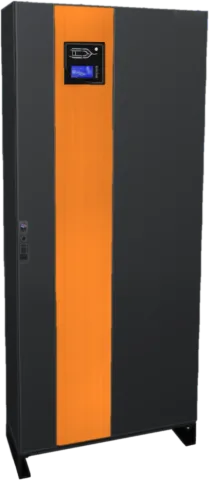
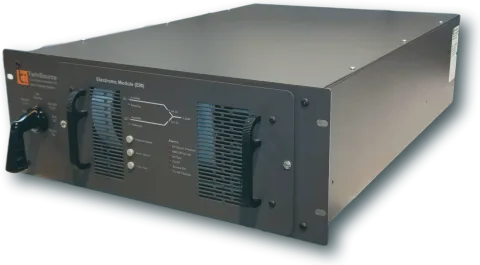
The DCC-4 family covers three-phase tool and facility voltages in 3-pole and 4-pole builds, including 208/120 V, 400/230 V, 480/277 V and the 200 V systems common on tools built to Japanese standards, from 10 to 600 A. Rack, wall and free-standing enclosures fit the subfab, the chase and the electrical room.
Why a quarter cycle matters
Power supplies built to the ITIC curve keep running through 20 ms with no input at all. A transfer that finishes well inside that window is invisible to the load.
Why TwinSource
- 200 V, 208 V, 400 V, 415 V and 480 V three-phase ratings for tools sourced from any region
- Transfers as fast as ¼ cycle per phase using SCRs, break-before-make
- 100% continuous-duty ratings: a 50 A switch carries 50 A all day
- Built-in bypass isolation or maintenance bypass, so the electronics can be serviced without dropping the load
- 2-pole and 4-pole models switch the neutral, which keeps separately derived sources separate
- Rack, wall and free-standing enclosures from 10 A to 600 A, 100 V to 480 V, 50 or 60 Hz
In service
TwinSource switches are used in microelectronics manufacturing, where a loss of power to the systems controlling tools, ovens and apparatus means lost product, delayed shipments and reduced quality.
Recommended families
Questions engineers ask
Our tools are F47 compliant. Why add an STS?
F47 sets a minimum. Events deeper or longer than its test points, full interruptions and three-phase sags fall outside it. An STS with a second source turns those events into a transfer the tool rides through.
Does the switch react to sags, or only to outages?
Both. It monitors the voltage of each source continuously and transfers when the preferred source leaves its tolerance window, then returns when the source is healthy again.
What second source do fabs use?
Commonly a feeder from a different substation or bus section. Some sites use a UPS or conditioned bus as the alternate for a group of critical loads. The more electrically independent the two sources, the better the result.
Ready to specify?
Narrow the range to your voltage, current and mounting, or send us the one-line diagram and talk to an engineer.