
Products / Single Phase STS
Single-phase static transfer switches
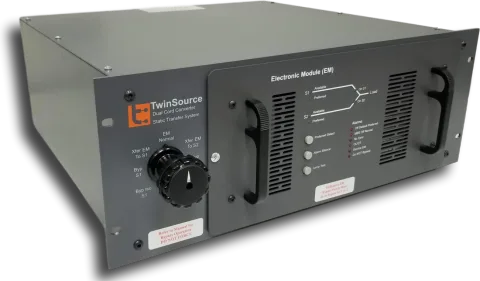
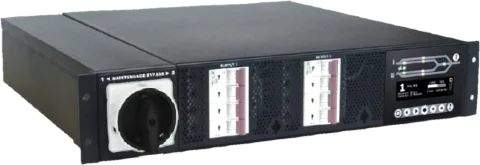
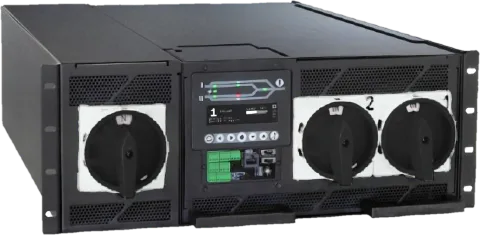
Most of the equipment that has only one power cord is single phase. TwinSource single-phase static transfer switches are 2-pole and SCR-based: the DCC-II from 30 to 50 A in a 4U rack chassis, and the DCC-4 from 10 to 600 A in rack-mount, wall-mount and free-standing enclosures, at every voltage from 100 to 240 V.
static, up to 144 kVA per switch
seven voltages, 50 or 60 Hz
both conductors transfer
kVA at your voltage
Find your voltage and current. Select a cell to open that combination in the configurator.
Why two poles
A transfer should look like unplugging the load from one outlet and plugging it into a completely independent one. That means moving both conductors. A single-pole switch that transfers only the hot wire leaves the two source neutrals tied together, which creates a second ground path between separately derived UPS systems, circulating current and a code violation.
Two poles also make the switch indifferent to the circuit. Line-to-neutral at 120 V, line-to-line at 208 V and 230 V systems in other regions are all the same to it.
Inside the DCC-II
- SCR switching with no moving parts in the power path, transferring as fast as ¼ cycle per phase.
- A hot-swappable electronic module that holds the logic and the SCRs and withdraws completely for service: MTTR under 2 minutes.
- A built-in bypass isolation switch in the 4U enclosure, at no extra cost, with optional mechanical interlocks.
- Voltage suppression and transient protection.
- Two remote alarm contacts and Modbus RTU via RS-485.
- TÜV certified to UL 1008 and CSA; CE marked.
Higher currents: the DCC-4
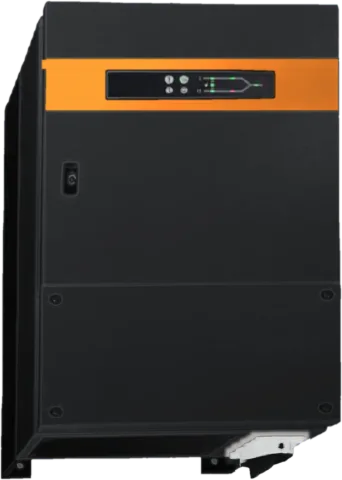
Above 50 A, or where there is no rack, the DCC-4 carries single-phase loads too. The rack-mount DCC-4-R covers 10 to 100 A and the DCC-4-R4 120 to 200 A; the wall-mount DCC-4-W and DCC-4-W4 cover the same ratings in a NEMA 1 enclosure; the free-standing DCC-4-S runs from 100 to 600 A. All are 2-pole in single phase, with maintenance bypass and Ethernet monitoring.
For smaller or less critical loads
Below 30 A, or where servers are redundant and budgets are tight, the 1U DCC-I covers 12 to 24 A with MagLatch latching relays and transfers in under half a cycle. Many sites use both: static switches on the loads that stop the business, relay switches on the rest.
Where single-phase static switches earn their place
Single-corded servers and appliances in a 2N data center. Routers, radios and dispatch consoles at a communications site. Controller displays and voice switching in an air traffic facility. SCADA servers and operator stations in a control house. Each is a modest single-phase load whose loss is out of proportion to its size, and each usually sits in a rack where two feeds are already present.
Sizing is simple arithmetic: volts times amps. A 30 A switch at 208 V carries 6.2 kVA, and a 50 A switch at 240 V carries 12 kVA. Size the feeder breakers and conductors to your electrical code and the operating manual.
Models in this category
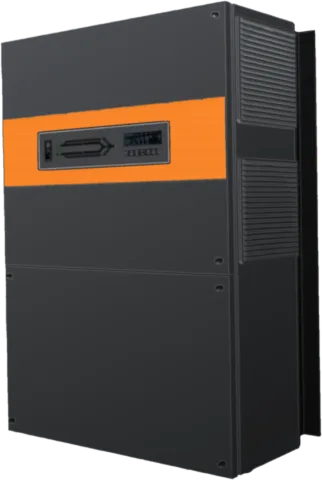
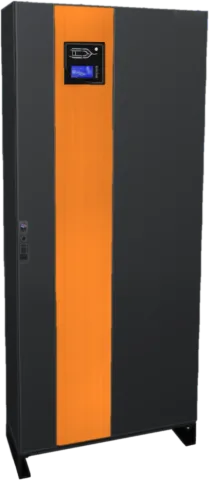
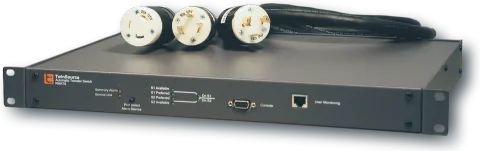
| Model | Type | Phase and poles | Voltage | Current | Transfer |
|---|---|---|---|---|---|
| DCC-II | STS | Single-phase 2-pole | 100–240 V | 30–50 A | As fast as ¼ cycle |
| DCC-4-R | STS | Three-phase 3 or 4-pole, or single-phase 2-pole | 100–480 V | 10–60 A three phase, 10–100 A single phase | As fast as ¼ cycle |
| DCC-4-R4 | STS | Three-phase 3 or 4-pole, or single-phase 2-pole | 100–480 V | 80–120 A three phase, 120–200 A single phase | As fast as ¼ cycle |
| DCC-4-W | STS | Three-phase 3 or 4-pole, or single-phase 2-pole | 100–480 V | 10–60 A three phase, 10–100 A single phase | As fast as ¼ cycle |
| DCC-4-W4 | STS | Three-phase 3 or 4-pole, or single-phase 2-pole | 100–480 V | 80–120 A three phase, 120–200 A single phase | As fast as ¼ cycle |
| DCC-4-S | STS | Three-phase 3 or 4-pole, or single-phase 2-pole | 100–480 V | 100–600 A three phase, 100–600 A single phase | As fast as ¼ cycle |
| DCC-I | ATS | Single-phase 2-pole | 100–240 V | 12–24 A | < ½ cycle |
Where they are used
Go deeper
Questions engineers ask
Which voltages are available?
100, 120, 200, 208, 220, 230 and 240 V, at 50 or 60 Hz, so the same switch family serves sites in every region.
Do I need two poles on a 120 V circuit?
Yes, if the two sources are separately derived. The neutral has to transfer with the hot conductor to keep the sources independent.
My rack is three phase but the equipment is single phase. Which switch?
Follow the circuit feeding the rack. A three-phase rack PDU needs a three-phase switch ahead of it.
Ready to specify?
Open the configurator with this category already selected, or send us your one-line diagram.